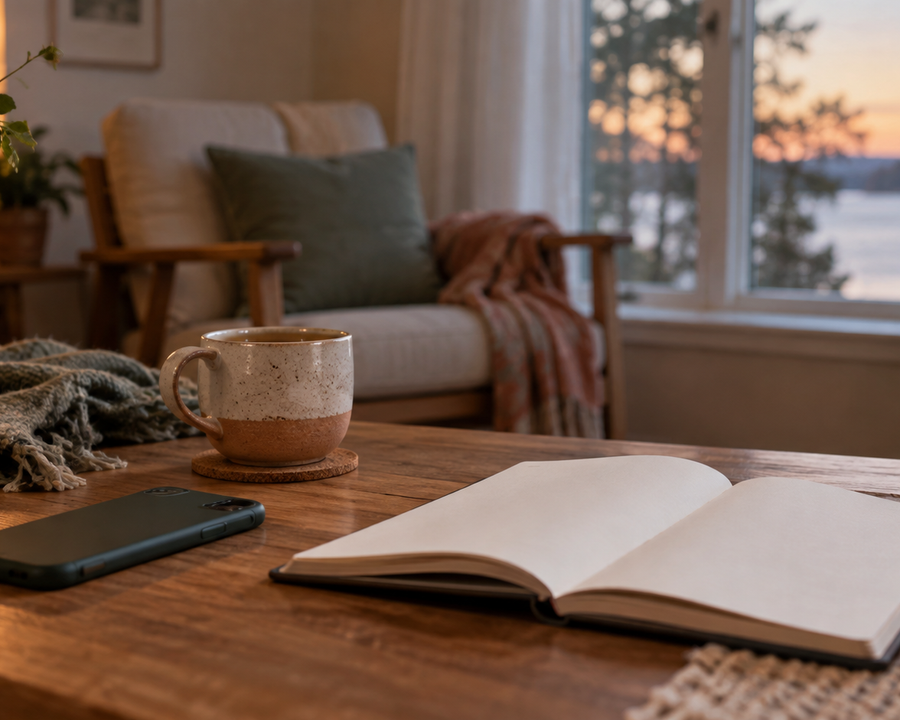


After a busy day, you may long for a quiet room. On another day, the same quiet can feel heavy. Time alone is not one experience. It can be a source of relief, a chance to hear yourself think, or a place where loneliness becomes harder to ignore.
Solitude and isolation are often used as if they mean the same thing, but the inner experience can be different. Solitude usually includes some choice and a sense that connection remains available. Isolation tends to feel imposed, painful, or disconnected from the relationships you want.
Time alone can meet different needs
Sometimes you need sensory quiet. Sometimes you need privacy to feel an emotion without managing someone else’s response. You may need play, prayer, movement, or a break from being useful. Asking what the time is for can turn an empty evening into intentional care.
Being alone can be a relationship with yourself, not a verdict about your relationships with others.
Notice your state before you choose the activity. If you are overstimulated, a quiet walk may help. If you feel flat and disconnected, staying in bed with your phone may deepen the distance. The question is not whether an activity looks restful. It is whether it meets the need beneath it.
Connection does not have to disappear when you want space. You can tell someone that you need an evening to yourself and still plan a call tomorrow. This kind of clear contact helps alone time feel chosen rather than like a silent test of whether anyone notices.
Listen for the difference
Solitude often leaves some trace of restoration, even if the problem has not changed. Isolation may leave you feeling smaller, more ashamed, or convinced that reaching out would be pointless. These signals are not moral judgments. They are information about what support is needed next.
Try a gentle experiment. Spend twenty minutes alone without filling every pause, then send one low pressure message to someone safe. Notice which part changes your state. You may learn that you need both quiet and contact, simply in a different order.
If being alone brings intense fear or persistent hopelessness, do not treat that as a sign that you have failed at independence. Humans need connection. Reaching out can be a grounded response, especially when withdrawal has started to narrow your world.
You can also create a return point. Decide when you will eat, go outside, answer a message, or join the next part of your day. A small structure can make spaciousness feel supportive rather than endless.
Make solitude more nourishing
Choose one activity that helps you return to yourself rather than disappear from yourself. It might be cooking, music, stretching, a familiar book, or sitting outside. Let the activity be simple enough that it does not become another performance.
The goal is not to prefer being alone all the time. It is to become more honest about when space restores you and when connection would be kinder. Both needs belong in a balanced life.
Frequently asked questions
What is the difference between solitude and isolation
Solitude often includes choice and a sense that connection remains possible. Isolation tends to feel unwanted, painful, or difficult to change.
How can I make time alone feel better
Choose an activity that meets your current need, set a gentle return point, and keep a thread of connection open with someone you trust.
What if I feel lonely whenever I am alone
Loneliness deserves attention rather than criticism. Try a small form of contact and consider professional support if disconnection is persistent or affecting daily life.
Sources
- My mental health do I need help — National Institute of Mental Health
- Maintaining healthy relationships and mental wellbeing — NHS Every Mind Matters