
Why Your Body May Still Feel On Duty
You close the laptop, finish the appointment, or walk through the front door, but your shoulders remain lifted. Your jaw is tight. You are tired and somehow still restless. Sometimes stress does not end at the same moment as the situation that required you to cope. The body can continue preparing for the next demand even when nothing else needs to happen tonight.
This response is not a personal failure or proof that you are doing relaxation incorrectly. Stress mobilizes attention and energy. Health Canada describes changes such as quicker breathing, a faster heartbeat, difficulty concentrating, irritability, changes in sleep, and restlessness among possible stress responses. Each person has a different pattern, and the same person may notice different signals at different times.
Start With Noticing Rather Than Fixing
A quick body check can become another performance task if the question is How do I make this stop. Try a more neutral question instead. Where do I notice effort right now. Perhaps your hands are clenched, your breathing is shallow, or your stomach feels unsettled. Name what is present without deciding that it is dangerous or unacceptable.
Then notice what your body is already doing well. Your feet may be supported by the floor. Your back may be held by a chair. An exhale may arrive on its own. This wider attention prevents one uncomfortable sensation from becoming the whole picture. If focusing inward increases distress, orient outward instead by noticing colours, sounds, temperature, and the shape of the room.
You do not have to force calm before you can offer your body some support.
Create a Transition the Body Can Recognize
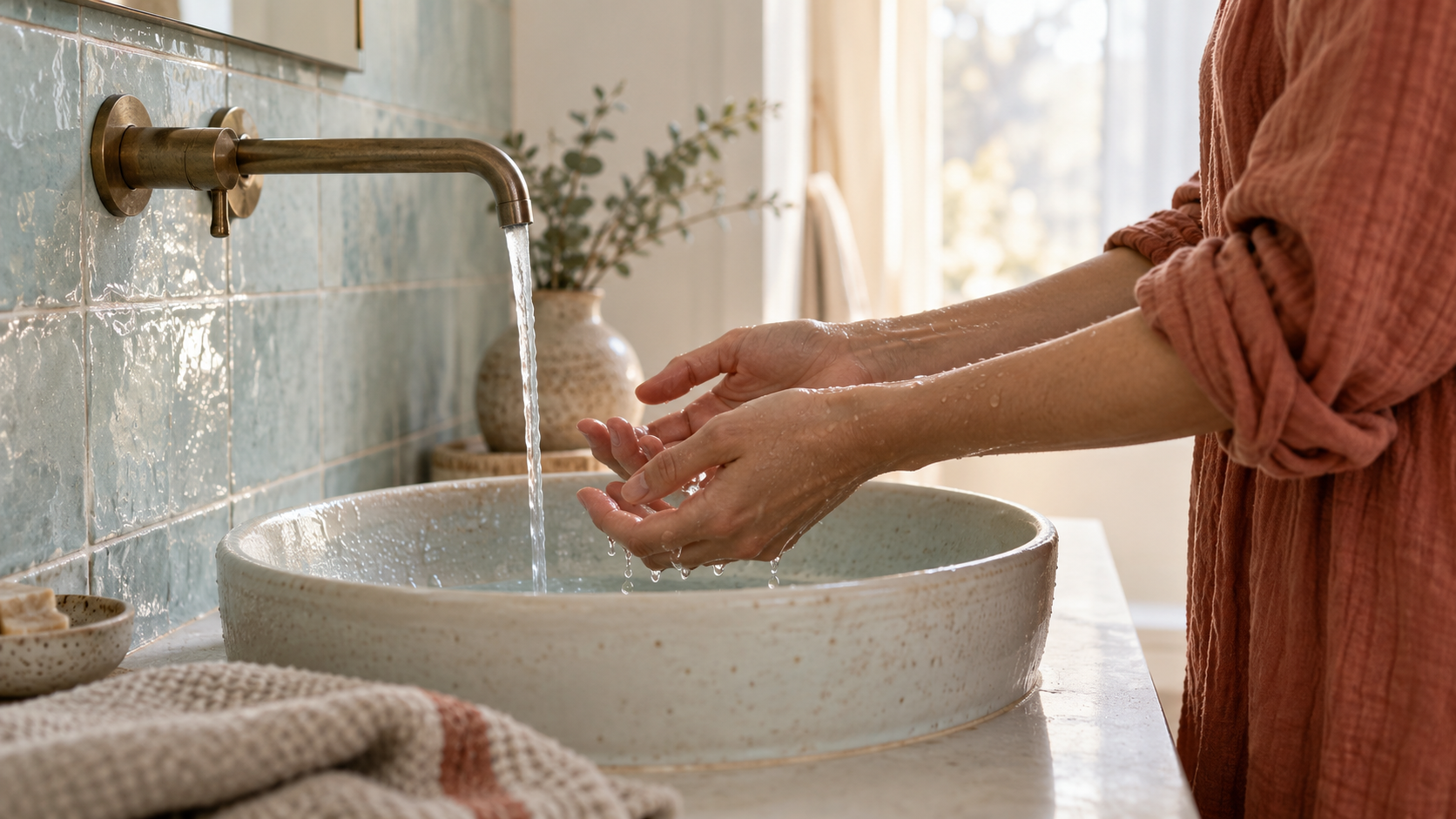
The end of a demanding period may need a visible marker. Change clothes, wash your hands slowly, step outside for five minutes, or put work materials out of sight. The activity matters less than the repetition. A familiar transition can help separate one part of the day from the next when your thoughts are still moving quickly.
Choose something simple enough to repeat on an ordinary day. A long routine can add pressure when capacity is already low. The World Health Organization suggests grounding, making room for difficult thoughts and feelings, acting on values, and engaging with the present as practical stress-management skills. Even a few minutes of practice can be meaningful.
Let Regulation Be Flexible
Calming strategies are not universal. Slow breathing may feel steadying for one person and uncomfortable for another. Movement, music, warmth, cool air, repetitive tasks, or quiet company may fit better. Ask what shifts your activation by a small amount rather than searching for the perfect technique. The goal is more choice, not a permanently relaxed body.
It can also help to look beyond the moment. If your body is regularly carrying an unsustainable workload, no evening ritual can solve the source on its own. Consider which demands can be changed, shared, delayed, or discussed. Support may include a workplace conversation, practical help at home, medical care, or therapy. Coping skills and changes to the environment can belong in the same plan.
Know When to Seek More Support
Physical sensations can have many causes. New, severe, or concerning symptoms should be discussed with a physician or other qualified health professional rather than assumed to be stress. Seek urgent medical help for symptoms such as chest pain, severe difficulty breathing, fainting, or anything that feels like an emergency.
If tension, worry, sleep disruption, or exhaustion keeps affecting daily life, therapy can offer space to understand the pattern. A person-centred approach does not prescribe one correct way to calm down. It explores what your body has learned to anticipate, what your circumstances are asking of you, and which forms of support feel realistic and respectful.
Common questions about stress in the body
Why do I feel tense when nothing is happening?
Your body may still be responding to an earlier demand, ongoing uncertainty, or a pattern of sustained pressure. Tension can also have physical causes, so persistent or concerning symptoms are worth discussing with a health professional.
Do I need to relax completely for a strategy to work?
No. A useful strategy may lower activation slightly, help you feel more present, or give you another choice. Expecting complete calm can turn support into another test you feel required to pass.
What if breathing exercises make me more anxious?
You do not have to use them. Try outward grounding, gentle movement, temperature, music, or contact with a trusted person. A therapist can help you find approaches that feel safer and more workable.
Sources
- Mental Health Coping With Stress — Health Canada
- Doing What Matters in Times of Stress — World Health Organization
- Mental health support Get help — Public Health Agency of Canada